Events are an integral part of the master programs: from workshops with guests professors to lectures series with relevant practitioners.
Wed, Nov 4, 2026
Masters’ Talks
7.30 pm — Event at DHub
Open to the public

Izaskun Chinchilla
Los barrios del buen vivir: A Perspective from Tentative Design
Los barrios del buen vivir: A Perspective from Tentative Design
What if designers made fewer mistakes if they stopped trying to get it right the first time? Neighborhoods of Good Living explore a city understood not as a finished object, but as a living laboratory: spaces that are tested, inhabited, evaluated, and transformed. The lecture will explore the work of Izaskun Chinchilla Architects and the book Neighborhoods of Good Living to ask what happens when design abandons certainty and embraces hypothesis, experimentation, and adaptation. A perspective from tentative design to conceive of well-being as something experienced collectively.
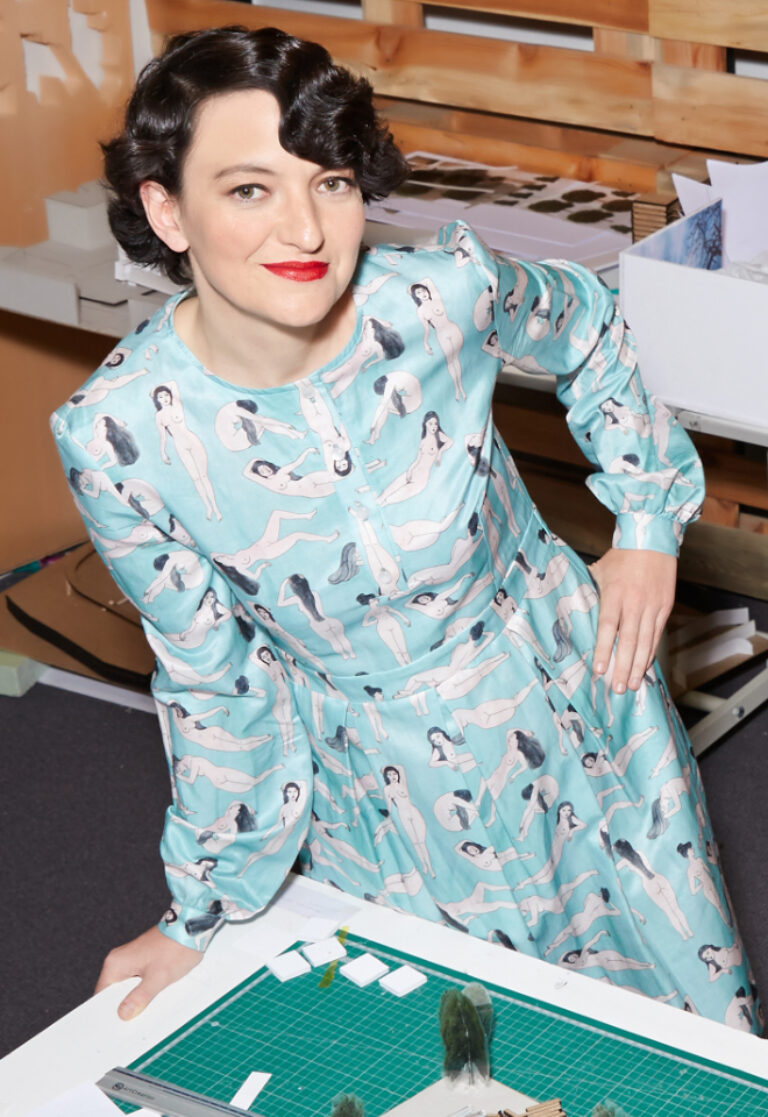
Izaskun Chinchilla, a professor at the Bartlett School of Architecture, University College London (UCL), and an honorary fellow of the Royal Institute of British Architects (RIBA), integrates ecology, care, and participation into her practice, research, and teaching. Her work promotes more equitable and sustainable cities. She combines design, critical thinking, and cultural knowledge to promote an architecture that is educational, cooperative, and oriented toward the common good. She is the author of La ciudad de los cuidados (Catarata, 2021) and Los barrios del buen vivir (Catarata, 2026).
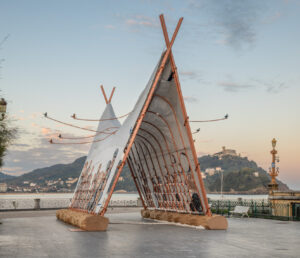
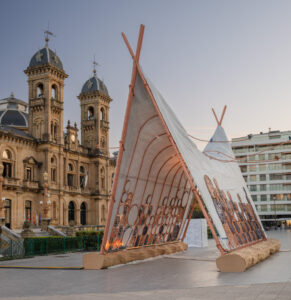
Izaskun Chinchilla Architects is a group of architects led by Izaskun Chinchilla that brings together interdisciplinary teams for each project. Their work focuses on optimizing the environmental performance of architecture, public space, facilities, art, and cultural products through innovation. Public engagement and social participation are pillars of their practice, which promotes collaboration in the construction of shared spaces and community-based decision-making regarding the use, location, and characteristics of the facilities they design.


past events
Wed, Feb 12, 2025
masters’ talks
7.30 pm — Event at DHub
Open to the public

Sougwen 愫君 Chung, Scilicet
Seeing Double – Bridging Dualities with Relational Intelligence
Where does “AI” end and “we” begin? Artist and researcher Sougwen Chung’s ever-evolving work in human and machine collaboration builds upon a decade-long international journey. Starting with a simple line, the process has led to interdisciplinary insights, philosophical inquiry, and technological invention through pioneering artistic practice. Intertwining perspectives in art and science, Chung’s practice envisions alternative futures for the relationship of humans and machines. “Embracing contradictions in art and research can pave the way to a third path, inspired by tradition and the development of new hybridities,” Chung says.
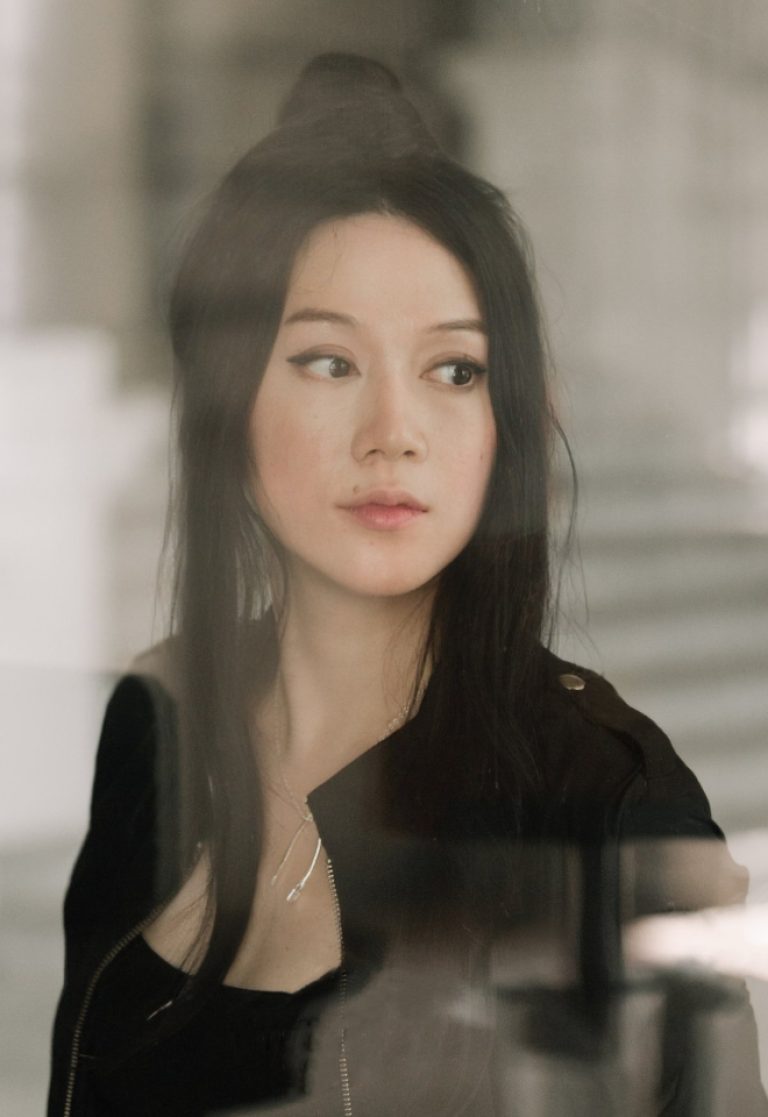
Sougwen 愫君 Chung is a Chinese-Canadian artist and (re)searcher based in London. Chung’s work explores the mark-made-by-hand and the mark-made-by-machine as an approach to understanding the dynamics of humans and systems. Chung is a former research fellow at MIT’s Media Lab and a pioneer in the field of human-machine collaboration. Sougwen’s work MEMORY is part of the permanent collection of the Victoria and Albert Museum, and is the first AI model to be collected by a major institution. Recently, Chung was recognized as a Cultural Leader at the World Economic Forum, one of four recipients of the TIME100 Impact award, and named one of TIME’s 100 Most Influential People in AI.
Scilicet is a studio exploring collaboration; engaging modes of sensing and mark-making between the human and machine, organic and synthetic, and improvisational and computational.
Founded by artist and researcher Sougwen Chung, Scilicet pioneers interdisciplinary collaboration between artists and robotic technologies, with a focus on experimentation, invention, and care.
By engaging technology not as a tool but as a collaborator, Scilicet develops configurations of human and machine beyond automation. We explore these ideas through installations, performances, experiences, and artefacts.


Wed, Jan 15, 2025
masters’ talks
7.30 pm — Event at DHub
Open to the public

Llisa Demetrios, Eames Institute of Infinite Curiosity
What can we learn from Ray & Charles Eames that might apply to the challenges we face today?
What can we learn from Ray & Charles Eames that might apply to the challenges we face today?
Ray & Charles Eames demonstrated—time and time again—design’s unique ability to address disparate clients’ needs, while finding ways to improve quality of life for all. What can we as designers and creatives learn from the Eameses that might apply to the challenges we face today?
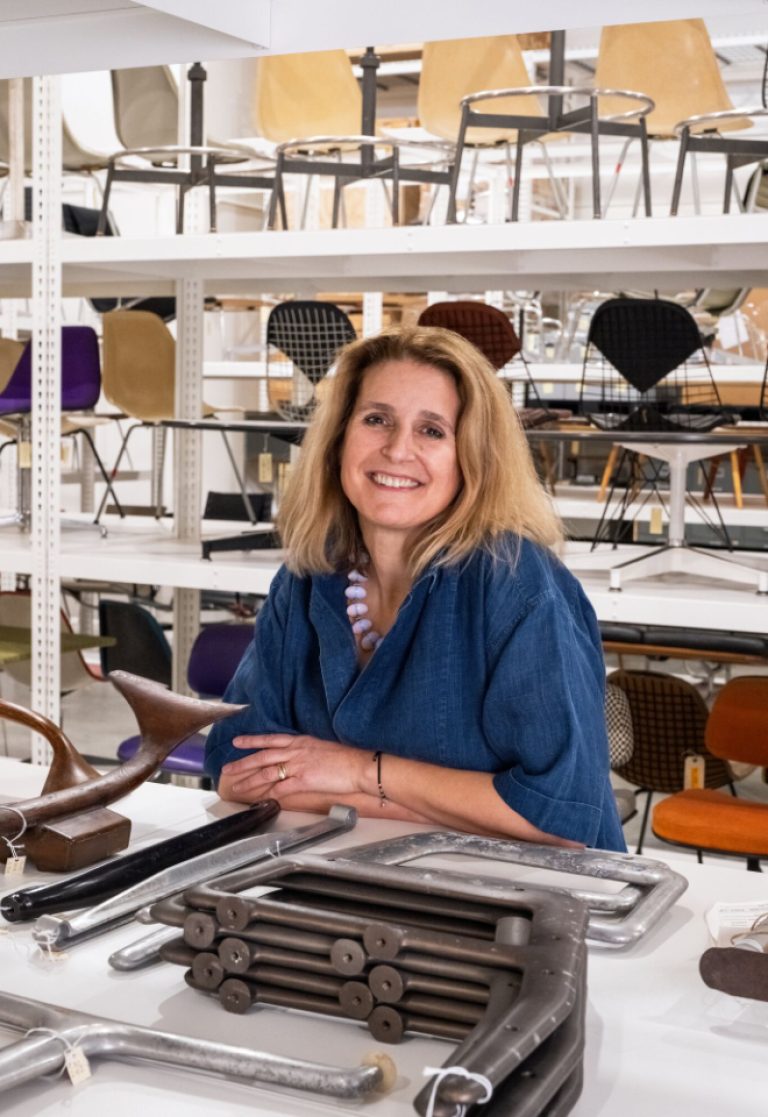
Llisa Demetrios is the youngest granddaughter of iconic designers Charles & Ray Eames. She began her archiving career at the Mies van der Rohe Archive at MoMA in New York, and has since dedicated herself to extending her grandparents’ most important gifts to the world: their infinite curiosity and iterative design process. Her personal mission is to equip everyone with lessons of Charles & Ray so that anyone can use design to solve problems at all scales. Today, as Chief Curator at the Eames Institute, Llisa continues to share learnings from her legacy through exhibitions, events, and public tours at the new public space in Richmond.
Llisa Demetrios has spent decades caring for the Eames Collection and curating the Eames Ranch, initially alongside her mother, Lucia Eames, and now as Chief Curator alongside the Eames Institute of Infinite Curiosity team. Llisa loves welcoming guests, be they Eames aficionados or people entirely unfamiliar with design. Before the advent of the Institute, Llisa facilitated loans for “The World of Charles & Ray Eames” exhibition that started at the Barbican Centre in England in 2015 and continued to Sweden, Portugal, Belgium, Germany, Michigan, and the Oakland Museum of California in February 2019. She is also a founding and current member of the Eames Foundation Board of Directors, which oversees the historic Eames House in Los Angeles, and also a shareholder of the Eames Office.
Eames Institute of Infinite Curiosity
The overarching goal of the Eames Institute of Infinite Curiosity is to unpack the way that Ray & Charles Eames worked, the way they infused their designs and lives with curiosity and discovery at every turn to solve problems at any scale. “We don’t do ‘art’ – we solve problems,” said Charles. Then he added “How do we get from where we are to where we want to be?” They demonstrated—time and time again—design’s unique ability to address disparate clients’ needs, while finding ways to improve quality of life for all.
Being able to share the legacy of Ray and Charles in this way, to showcase their incredible process and wide-angled vision of design, is the dream of a lifetime. Their boundless curiosity and relentless pursuit of solving problems in furniture, film, exhibits, architecture, and textiles is in the name of the Institute. The Institute aspires to be a home for curious problem-solvers, both on-line and on-land. I hope the Institute’s efforts will help people find inspiration for solving problems in their own world.


Wed, Nov 13, 2024
masters’ talks
7.30 pm — Event at DHub
Open to the public

Yosuke Ushigome, Normally
Making data speak human
Making data speak human
Designers across domains must increasingly engage with data. With the rise of AI, there is an opportunity to humanise data in innovative ways. In this presentation, I will introduce recent projects that explore these possibilities, ranging from an experimental tool translating energy forecasts into proverbs, to an internal application enhancing organisational efficiency. To bridge technology and human experience and decision making, data needs to speak human.
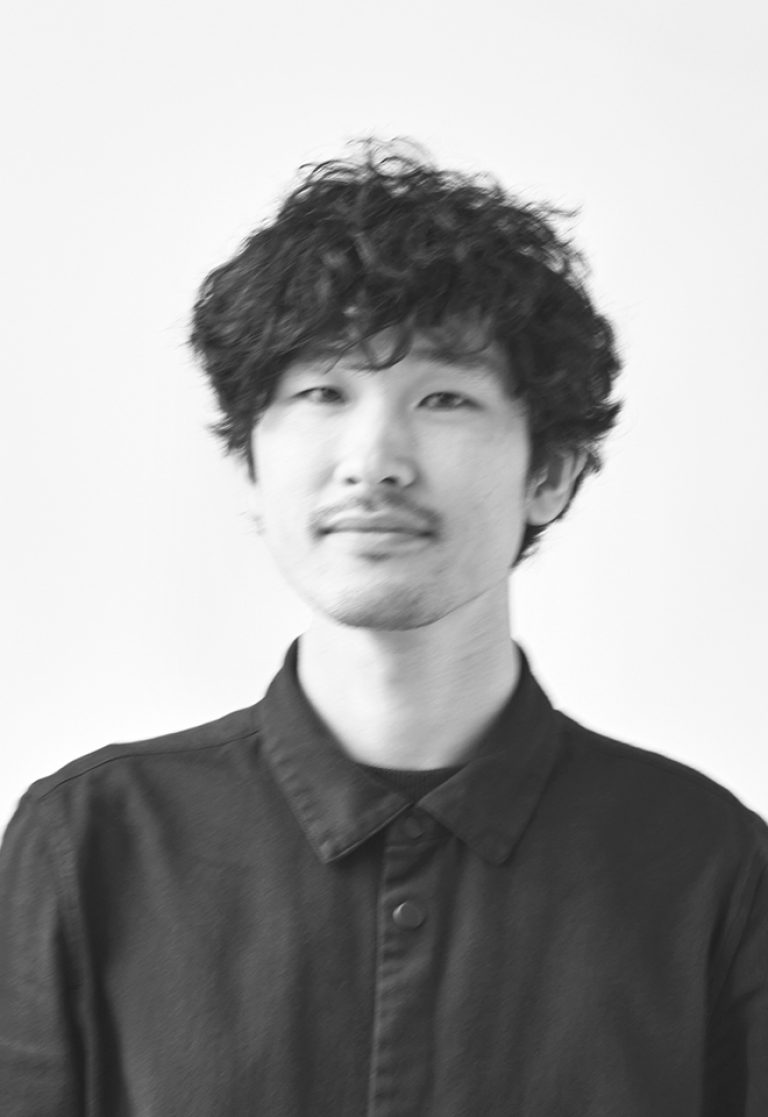
Yosuke Ushigome (yoh-skay oo-shee-goh-meh) is a London-based designer/technologist, currently working for Normally as Lead Interaction Designer. He works across disciplines with a focus on interaction design, digital prototyping, and futures research. For over 10 years, he has been involved in various R&D and visioning projects with organisations worldwide such as the NHS, Hitachi and Swarovski. He also writes about more equitable and sustainable ways we interact with technology on design publications such as Core77 and ICON magazine.
Normally unlocks the transformative potential of AI for clients, including IKEA, Google, Panasonic, and the NHS. We have a decade of experience at the intersection of human-centred design and AI engineering, applying AI to enhance operational efficiency and growth, and deliver innovative AI-enabled products and services


Wed, Oct 23, 2024
masters’ talks
7.30 pm — Event at DHub
Open to the public

Sissel Tolaas, Smell RE_searchLab
Smell Molecules are the Air’s Alphabet
Sissel Tolaas is a Smell RE_searcher and artist, born in Norway, based in Berlin, Germany.
Tolaas has been intensively researching, experimenting with, and working on the topic of smell since 1990. A pioneer in the field, she is renowned for her innovative and unique approach to advancing the science and understanding of olfaction.
Drawing on her expertise in forensic chemistry, chemical communication, sensory ecology, linguistics, and visual art, she has developed a broad range of ground- breaking interdisciplinary projects involving smell, implemented worldwide.
In January 2004, Tolaas founded the professional smell chemistry lab: SMELL RE_searchLab in Berlin – supported by the industry and various universities.
Her expertise includes advanced smell recognition, analysis, and reproduction, as well as the coding and functional understanding of smell molecules. She has created novel methods for coding abstract smell molecules and studying linguistic responses to both individual smells and olfactory experiences in general. Tolaas has explored the science and art of smell in diverse contexts, applying her knowledge to a variety of purposes and formats.
Her research and projects have won recognition through numerous national and international scholarships, honours, and prizes. She is very capable at collaborating intensively with those of other disciplines across the globe.
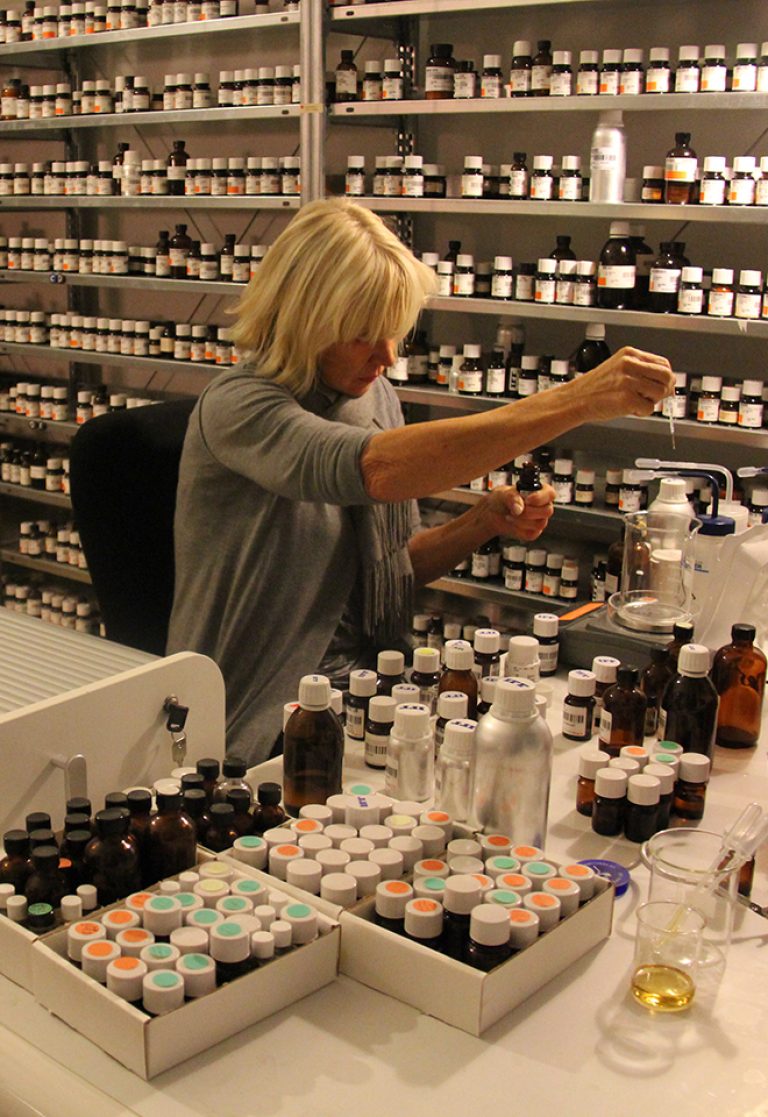
Tolaas has shown her projects in many museums and institutions including Museum of Modern Art, MOMA, New York; National Gallery of Victoria NGV, Melbourne; DIA Art Foundation, New York; CCA Singapore, Tate Modern London; Shanghai Minsheng Art Museum, Shanghai; MORI Museum, Tokyo. She has worked with universities such as MIT, Nanyang Technical, Tsinghua, Stanford, Harvard, and Oxford. She has built up several types of smell archives such as: Smell & Communication/ language; Smell & Coding, Smell & Anthropocene; Smell & Extinction; Smell & Sensory Ecology; Functional Smell Molecules. Tolaas’ collections of smell molecules; smell complex structures and smell para data from 1990 and ongoing are including up to 20,000 smell recording samples and formulas.
Smell Molecules are the Air’s Alphabet
How much of what we communicate is influenced by what we see? And what happens to our stories when sight is no longer an option?
How can we activate the hidden information in the air that surrounds us all? Air is a shared medium, connecting all living beings. Where there is air, there is life, and with life comes the language of smell. Air is both information and emotion in motion.
Could the details carried by smell molecules transform how we communicate? How can we engage with critical topics from an entirely new perspective through olfactory information? What if the essence of content could be revealed through smell, offering a new way of perceiving the past, present, and future?
Working with experts and scholars worldwide, I focus on developing a new approach to understanding, communicating, and displaying the chemistry of smell in diverse contexts. I capture smell molecules from various sources, analyze them, build precise databases, and create innovative ways to narrate their stories. These molecules reveal dimensions often overlooked.
The goal is to inspire a shift towards a more sensory-driven perception of the world. The transformative power of smell has shown me that change is not just possible—it is essential. Smell, deeply linked to emotion and memory, has a profound significance in human experience. Its connection to the amygdala-hippocampal complex enhances its ability to evoke emotions and memories, making it a powerful yet neglected tool for understanding life.
Life is everywhere and constant. We all breathe the same air, collectively shaping it. My work serves as a reminder of this shared reality.
Historical, sociological, and cultural influences have led us to neglect parts of our potential. Education is vital for reawakening these dormant capacities, tapping into our sensory abilities.
Smell unites us and kindles joy, which is often overlooked today. Across cultures, it enriches social rituals and gatherings, shaping human connections. In a world dominated by virtual and artificial intelligence, we must remember that our senses are our most advanced interface—intrinsically intelligent and grounding us in our humanity.
Our emotional depth distinguishes us from machines, and smell plays a central role in that.
The essence of life lies in reconnecting with our olfactory senses. Training this sense provides fresh perspectives on societal challenges and brings optimism. With growing global instability, recalibrating our communication and decision-making processes is more crucial than ever.
We need a sensory reboot—an approach to interpreting sensory inputs constructively. Engaging our sense of smell activates memories and emotions, fostering learning and action. Instead of being constantly online, we should strive to be “on-life,” rooted in genuine experiences. Addressing global challenges begins by reconnecting with our senses, cultivating tolerance, and rediscovering what it truly means to live.


Thu, May 9, 2024
masters’ talks
7.30 pm — Event at DHub
Open to the public

Eyal Weizman, Forensic Architecture
Ungrounding
Eyal Weizman is the founder and director of Forensic Architecture and professor of Spatial and Visual Cultures at Goldsmiths, University of London, where in 2005 the founded the Centre for Research Architecture. In 2007 he set up, with Sandi Hilal and Alessandro Petti, the architectural collective DAAR in Beit Sahour/Palestine. He is the author of many books, including Hollow Land, The Least of all Possible Evils, Investigative Aesthetics, The Roundabout Revolutions, The Conflict Shoreline and Forensic Architecture. Eyal held positions in many universities worldwide including Princeton, ETH Zurich and the Academy of Fine Arts in Vienna.
He is a member of the Technology Advisory Board of the International Criminal Court and of the Centre for Investigative Journalism.
In 2019 he was elected life fellow of the British Academy. In 2020 he received an MBE for ‘services to architecture’ and in 2021 the London Design Award. Forensic Architecture is the recipient of a Peabody Award for interactive media and the European Cultural Foundation Award for Culture.
Eyal studied architecture at the Architectural Association, graduating in 1998. He received his PhD in 2006 from the London Consortium at Birkbeck, University of London.
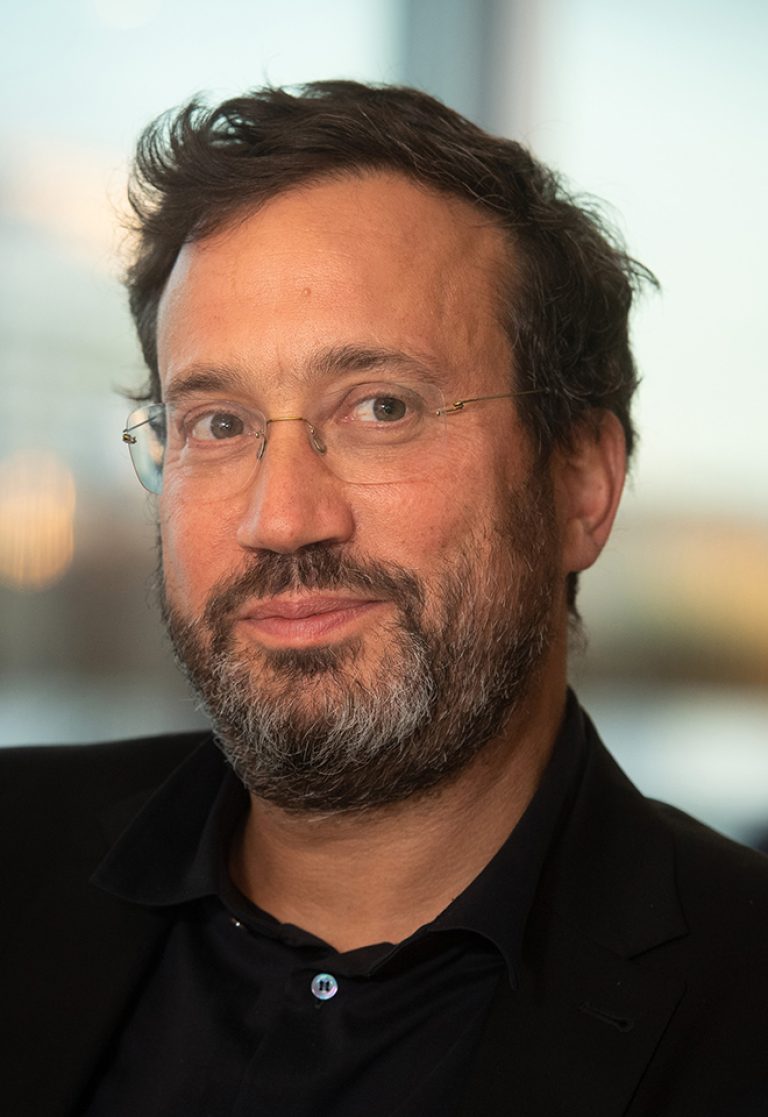
© David Ausserhofer / Robert Bosch Academy
Forensic Architecture is a research agency based at Goldsmiths, University of London. Our mandate is to develop, employ, and disseminate new techniques, methods, and concepts for investigating state and corporate violence. Our team includes architects, software developers, filmmakers, investigative journalists, scientists, and lawyers.
We are an interdisciplinary agency operating across human rights, journalism, architecture, art and aesthetics, academia and the law; in 2022, the Peabody Awards programme wrote that we had co-created ‘an entire new academic field and emergent media practice’.


Wed, Apr 10, 2024
masters’ talks
7.30 pm — Event at DHub
Open to the public

Irma Boom
Boom & Book
Irma Boom is a bookmaker based in Amsterdam. She has created over five hundred books. Her experimental approach often challenges the conventions of traditional books in both physical design and printed content. Since 1992, Boom has been senior critic at Yale University, New Haven, Connecticut, and she gives lectures and workshops worldwide. She has received many awards for her book designs and, in 2001, was the youngest person ever to receive the Gutenberg Prize.
Boom’s books are in the permanent collections of the Museum of Modern Art, New York; Art Institute of Chicago; Vatican Library; and Centre Pompidou, Paris, among other institutions. The Special Collections of the University of Amsterdam collect her complete oeuvre. In 2014, Boom received the Johannes Vermeer Award, the Dutch state prize for the arts. In 2019, she received an honorary doctorate from the Royal College of Art, London.
The Survival of the Book or The Renaissance of the Book!
The distribution of information has always been dependent on its changing form. The classic book can’t escape that and is now feeling it acutely. The digital book is decidedly on the rise. But its appearance in the form of flat, digital images need not threaten the three-dimensional book. The new competition even encourages us to explore the intrinsic characteristics of the printed book more intensely.
I think we stand on the verge of a new flourishing of the classic book. Perhaps it has even begun already: the Renaissance of the book. For the printed book, preconceived layouts are a thing of the past. The book designer must first become thoroughly familiar with the content before beginning the actual task at hand: conceiving a structure and a form. One can compare designing a book to performing a piece of music: a conductor explores the music and interprets it. The book designer is an editor and director of texts and images.
The result of this effort is the freezing of time and information, which is a means of reflection; compare it to a photograph or a painting. An image at a given moment serving as a reference of time and place. The flux inherent in the internet doesn’t allow you that kind of time. The printed book is final and thus unchangeable. Moreover, the extra use of base materials and man-hours (with printing and binding) forces you, to some degree, to make conscious choices.
I make books where content and form are closely connected. The content of the material very much determines the design. This makes each book unique: never the result of routine treatment. My books have a physical presence through their dimensions, scale and weight. Their form may be emphatic, but it is always determined by the content. The need for the book’s intimacy – the paper, the smell of ink – is certainly not nostalgia or false sentiment.
The printed book is a fundamental and integral part of our tradition and culture, of published and public knowledge and wisdom. The book is dead. Long live the book!


