Events are an integral part of the master programs: from workshops with guests professors to lectures series with relevant practitioners.
Wed, Nov 4, 2026
Masters’ Talks
7.30 pm — Event at DHub
Open to the public

Izaskun Chinchilla
Los barrios del buen vivir: A Perspective from Tentative Design
Los barrios del buen vivir: A Perspective from Tentative Design
What if designers made fewer mistakes if they stopped trying to get it right the first time? Neighborhoods of Good Living explore a city understood not as a finished object, but as a living laboratory: spaces that are tested, inhabited, evaluated, and transformed. The lecture will explore the work of Izaskun Chinchilla Architects and the book Neighborhoods of Good Living to ask what happens when design abandons certainty and embraces hypothesis, experimentation, and adaptation. A perspective from tentative design to conceive of well-being as something experienced collectively.
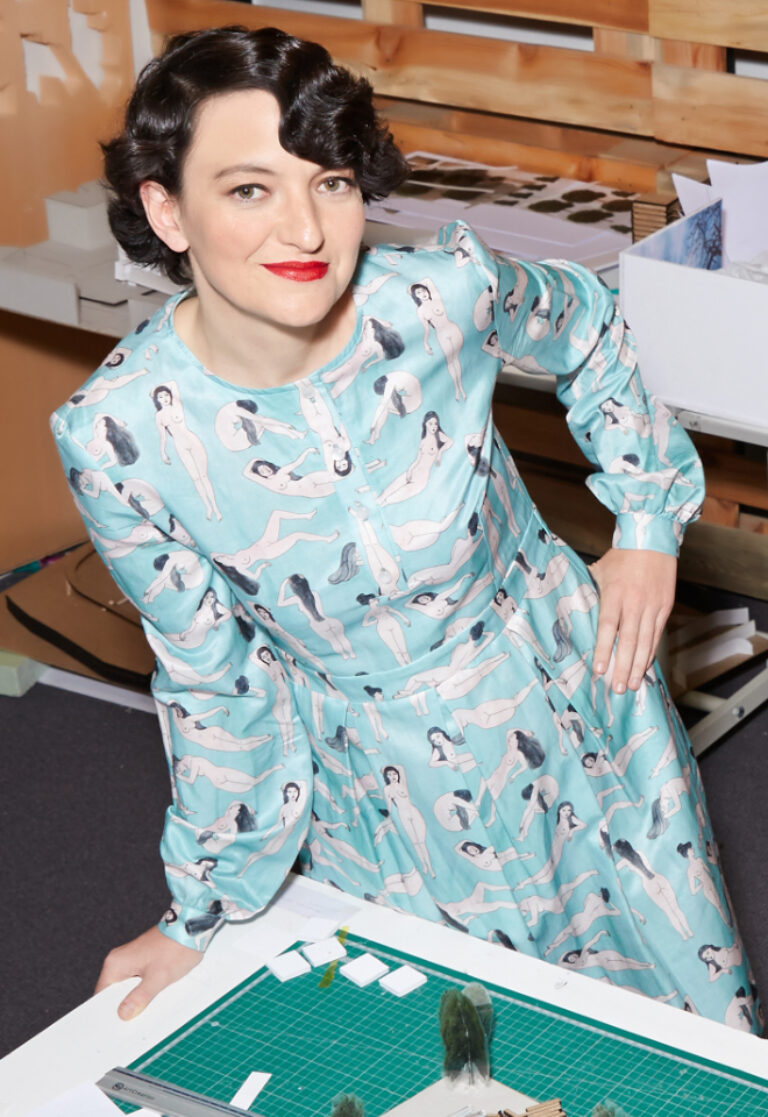
Izaskun Chinchilla, a professor at the Bartlett School of Architecture, University College London (UCL), and an honorary fellow of the Royal Institute of British Architects (RIBA), integrates ecology, care, and participation into her practice, research, and teaching. Her work promotes more equitable and sustainable cities. She combines design, critical thinking, and cultural knowledge to promote an architecture that is educational, cooperative, and oriented toward the common good. She is the author of La ciudad de los cuidados (Catarata, 2021) and Los barrios del buen vivir (Catarata, 2026).
Izaskun Chinchilla Architects is a group of architects led by Izaskun Chinchilla that brings together interdisciplinary teams for each project. Their work focuses on optimizing the environmental performance of architecture, public space, facilities, art, and cultural products through innovation. Public engagement and social participation are pillars of their practice, which promotes collaboration in the construction of shared spaces and community-based decision-making regarding the use, location, and characteristics of the facilities they design.


past events
Mon, Mar 2 , 2026
Beyond Sessions

Gaston Welisch
Augury Birdwalk
For all Beyond students
Augury Birdwalk
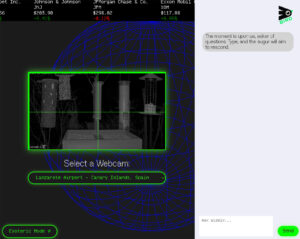
In this Beyond Session Gaston Welisch will introduce the concept of “Esoteric AI”, a playful take on the comfort of algorithmic precision and an introduction to the idea of “divination” to question AI narratives. The talk will be followed by a “Birdwalk” (birdwatching walk) so participants can peek into the future by interpreting bird flight via an AI model.
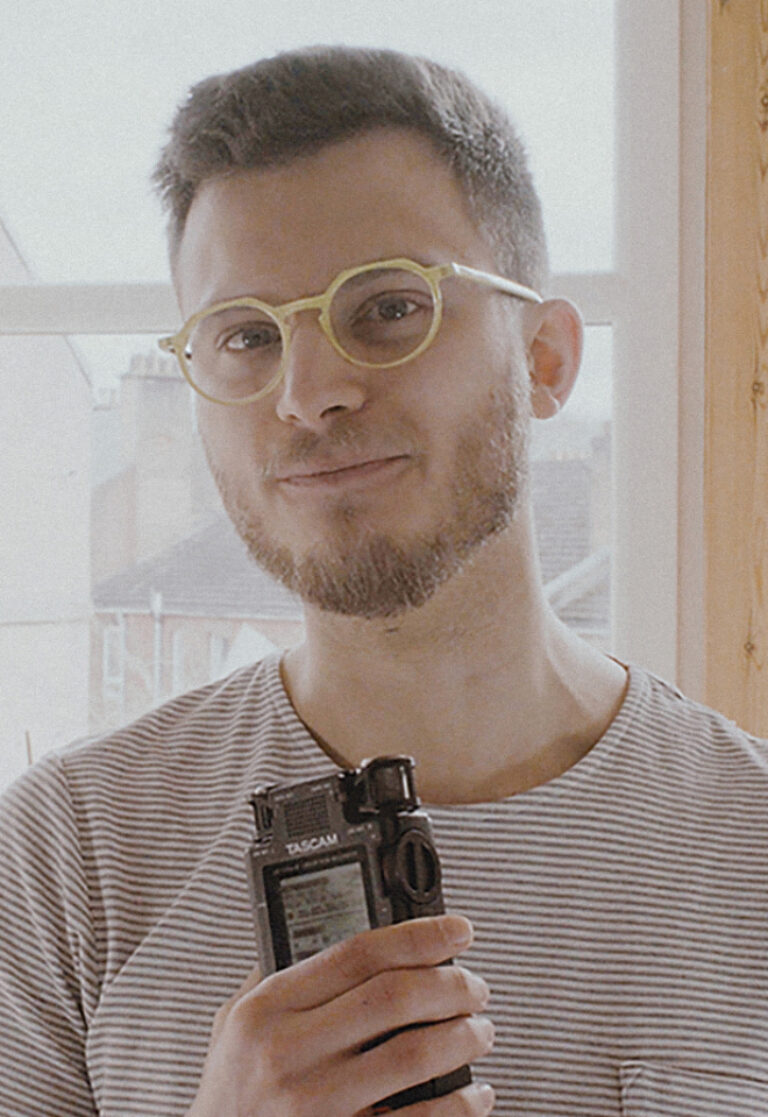
Gaston Welisch is an artist, researcher and designer based in Scotland.
He focuses on incorporating play into our interactions with everyday objects and environments

February 16 — 20, 2026
MIWW workshop
Masters’ Interdisciplinary Workshops Week

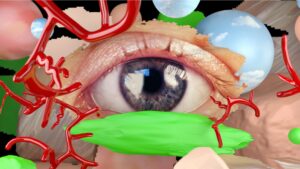
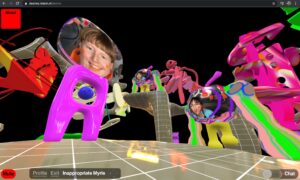
Tereza Ruller, The Rodina
The Synthesized Self
Open to all master students
Crafting Personal Narratives through AI and Sound
Inspired by Donna Haraway’s A Cyborg Manifesto, this workshop explores the intersection of human creativity and artificial intelligence through inclusive music-making. Participants use generative music AI to transform personal text prompts and lyrics into complete songs, without needing musical experience. The process emphasizes self-expression, identity, and storytelling. The experience extends into visual creation, as participants design simple animated posters or videos that reflect the themes, emotions, and keywords of their AI-generated songs.
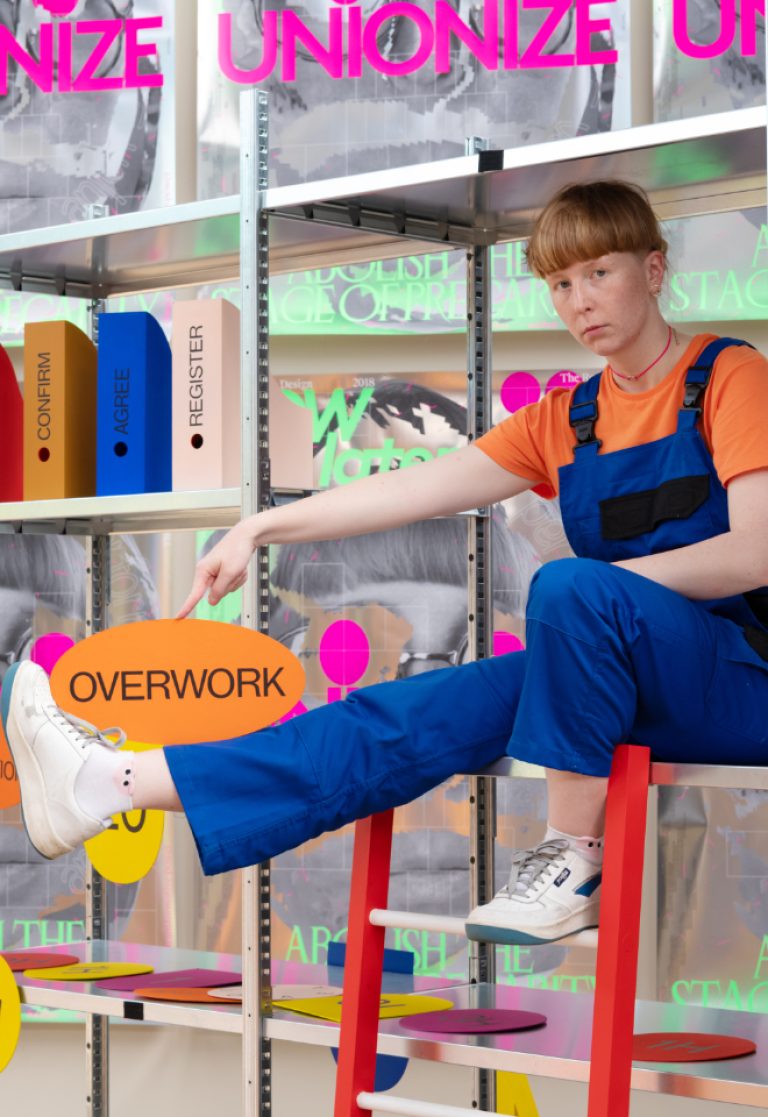
Tereza Ruller (she/her) identifies as a mother, a communication designer, and an educator. Her studio, The Rodina, explores the spatial and interactive possibilities of virtual and hybrid environments as spaces for new thoughts and aesthetics that emerge from the intersection of culture and technology.
Through her independent practice and PhDArts research at Leiden University, she examines performative and critical approaches to communication design, emphasizing playfulness, participation, and relationality. By addressing ecological and social crises—she seeks to develop collective shifts in perspective.
Ruller teaches as Professor of Digital Communication Design at HfG Karlsruhe and as a Critical Narratives tutor at Design Academy Eindhoven, nurturing contemporary design practices that encourage thinking-through-making and explore ways to engage with technology, society, and the environment.


Feb 16 — 20, 2026
MIWW workshop
Masters’ Interdisciplinary Workshops Week

Pedro Barquin & Anna Diaz, Hamill Industries
AI experimentation
Open to all Master’s students
An exploration of creative processes & custom workflows using visual algorithms
The workshop presents Hamill Industries’ experimental approach to visual creation, moving beyond purely digital tools toward self-built devices, practical effects, and hands-on experimentation. Drawing from everyday materials, natural observation, and the dialogue between analogue and digital technologies, their practice spans diverse tools such as 1980s consoles, oscilloscopes, pigments, light, and artificial intelligence. Through case studies and behind-the-scenes documentation, the seminar reveals an open, trial-and-error methodology rooted in an artisanal mindset and focused on building custom tools and processes.
With a strong emphasis on recent AI-based work, the seminar invites participants to treat generative AI as a flexible creative engine rather than a black box. Using open-source platforms like ComfyUI and self-constructed datasets, participants explore the creation of a “visual atlas of impossible bodies,” seeking beauty in error and deviation from standard aesthetics. The goal is to foster creative agency, DIY learning, and personal aesthetic exploration at the intersection of the real and the algorithmic.
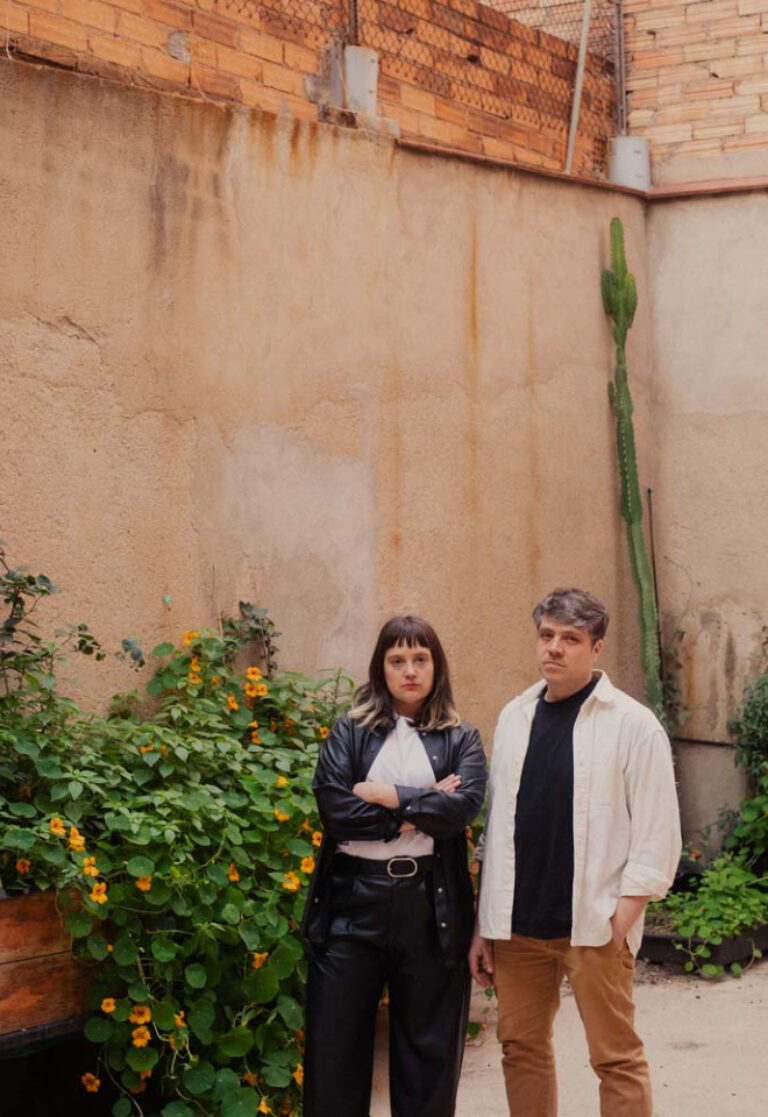
Hamill Industries (the artistic duo of Pablo Barquin and Anna Diaz) craft films, installations, and stage productions. With the physical world as inspiration, not only the virtual sphere is re-imagined, but so is reality. Straddling the line between inventors and illusionists, their projects are always highly sensory pieces, regardless of the final medium. Their work explores the expanded visual, committed to questioning and blurring boundaries between digital and tangible realms. Transmedia flexibility is facilitated by extensive workshop research, developing state-of-the-art tools. Their pioneering vision around the use of technology earned the trust of collaborators and institutions, including the San Francisco Ballet (with Tamara Rojo) Floating Points, CCCB or Caixaforum among many others.


Feb 16 — 20, 2026
MIWW workshop
Masters’ Interdisciplinary Workshops Week

Kris De Decker, Low-tech Magazine
Design within limits
Open to all Master’s students
How to Build Small-scale Autonomous Power Systems
This workshop introduces students to designing and building small-scale, autonomous renewable energy systems and devices that run on them. It focuses on hands-on skills such as constructing solar power installations, creating solar-powered heating appliances, and modifying commercial products to operate on low-voltage solar electricity. A key principle is avoiding batteries, which are often the least sustainable part of energy systems, by designing appliances and power setups that can function directly with variable solar input.
Beyond technical skills, the workshop promotes a bottom-up approach to renewable energy design. Instead of scaling renewable systems to support energy-intensive, fossil-fuel-based lifestyles, students learn to align energy demand with locally available and intermittent power sources. This mindset emphasizes designing within limits and engages with broader issues such as climate change, energy resilience and security, consumerism, e-waste, the right to repair, and circular, sustainable design practices.
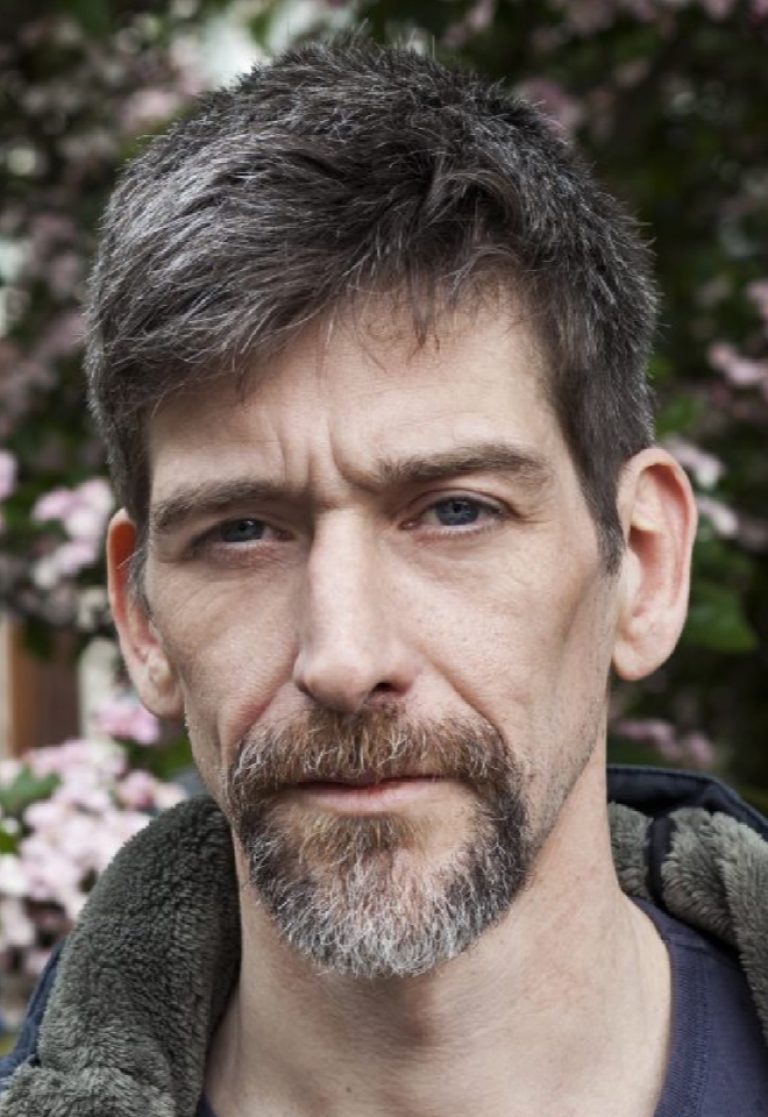
Kris De Decker is the author of Low-tech Magazine, which challenges the idea that every problem requires a high-tech solution. Since 2018, the magazine runs on a solar-powered server and has been in print since 2019. He has published research on energy demand at Lancaster University and co-founded Human Power Plant, exploring human energy use. Since 2016, he has collaborated on designing objects inspired by the past to guide technology toward more sustainable directions.


Feb 16 — 20, 2026
MIWW workshop
Masters’ Interdisciplinary Workshops Week

Elaine Lopez, Parsons School of Design NYC
Bound Together
Open to all Master’s students
Collective Bookmaking Through Dialogue, Connection, and Risograph Printing
Bound Together is an interactive, dialog-based workshop that uses conversation and Risograph bookmaking as tools for connection, reflection, and collective meaning-making. Created in response to transactional modes of communication, it invites participants to slow down, listen deeply, and engage one another as whole people rather than roles or titles. Through paired dialogue and hands-on making, the workshop emphasizes presence, care, and shared experience.
Grounded in psychologist Arthur Aron’s research on intimacy and informed by dialogical art practices and thinkers such as David Bohm and James Baldwin, the workshop combines structured questions with collage, Risograph printing, and binding. Participants print pages reflecting their conversations and assemble them into a collaborative book. Rather than prioritizing polish or productivity, Bound Together values experimentation, attentive listening, and the radical act of making together.
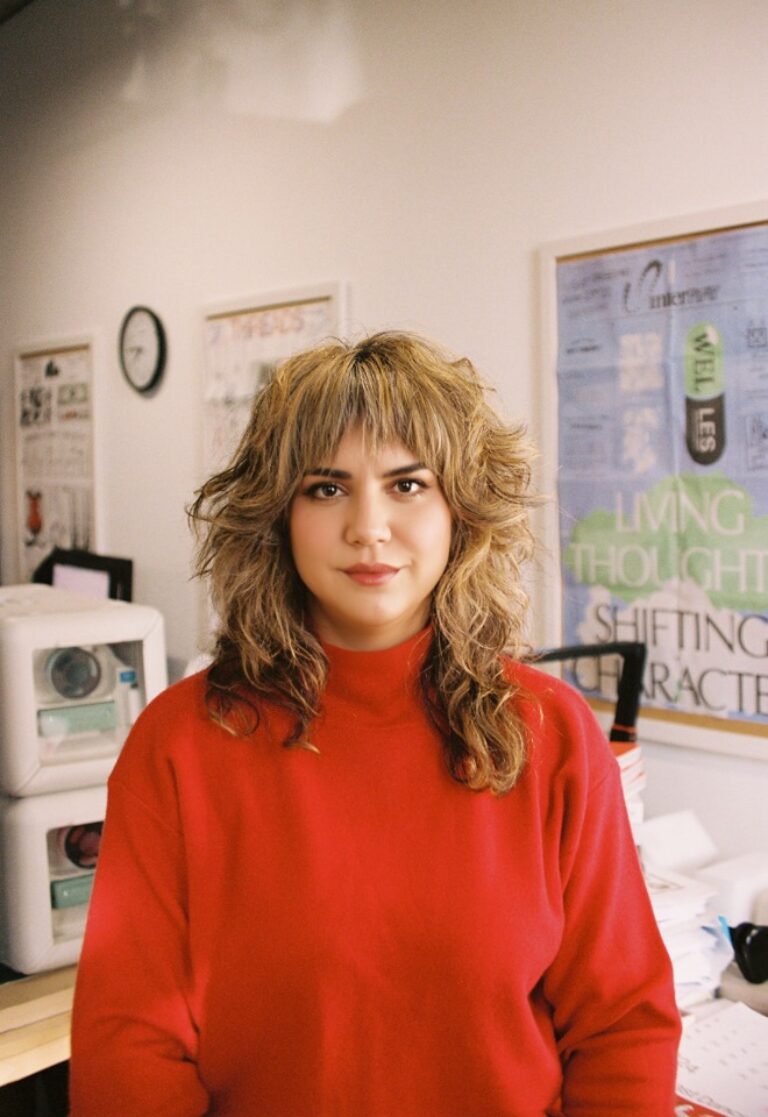
Elaine Lopez is a Cuban American designer, researcher, and educator whose work uses print, self-publishing, and participatory workshops to explore cultural identity, memory, diaspora, and U.S.–Cuba relations. Centered on collaboration and pedagogy, she frames publishing as a political, relational act. She is Assistant Professor of Communication Design at Parsons and runs LoPress Press, collaborating with institutions and exhibiting, lecturing, and leading workshops internationally.


Feb 16 — 20, 2026
MIWW workshop
Masters’ Interdisciplinary Workshops Week

Stephanie Rodriguez & Ricardo Lynch
Garden of Light, Movement & Sound
Open to all Master’s students
An AI + Arduino Creative Technology Experience for Artists
In this 4-day workshop, artists collaborate with AI and Arduino to craft reactive plants that glow, move, and sing — forming a shared Garden of Light, Movement & Sound. This hands-on workshop invites participants to explore creative human–machine collaboration through the design and construction of a living plant prototype.
Working in small groups, participants will create a sculptural plant that responds to human presence using light, sound, and movement. Each plant will be built on a shared physical framework and will include 3D-printed structural components, ensuring coherence while leaving room for creative expression. The workshop is designed for beginners—no prior experience in programming or electronics is required.
Participants will learn how AI can be used as a creative partner through “vibe coding,” helping to shape each plant’s personality, behavior, color palette, and narrative. By the end of the session, all creations come together to form a collective interactive garden, bringing to life the concept of human–machine co-creation. Participants will leave with a practical understanding of AI-assisted creativity, basic interactive design principles, and a tangible experience of collaborative making.
Stephanie Rodriguez is a leader and educator working at the intersection of technology and human experience. With a background in mechatronics engineering and a master’s degree in intelligent interactive systems, her work centers on human-centered and ethical AI. She has led and contributed to projects in robotics and artificial intelligence across multiple organizations, with experience in social robotics, generative AI, computer vision, data science, and emotion-inspired robotic systems.

Ricardo Lynch is a Digital Interaction Designer and engineer passionate about technology, politics, and education. Experienced in manufacturing, electronics, and digital products with societal value, currently focused on product design and development at Futurity Systems. Former Deputy Director at Exploratec UDD, bridging technology with design and engineering students, consulting on projects. Professor for interaction, robotics, and prototyping workshops at UDD and OAS Dlab Global.